How AI Improves Job Matching and Reduces Wrong Hiring Decisions
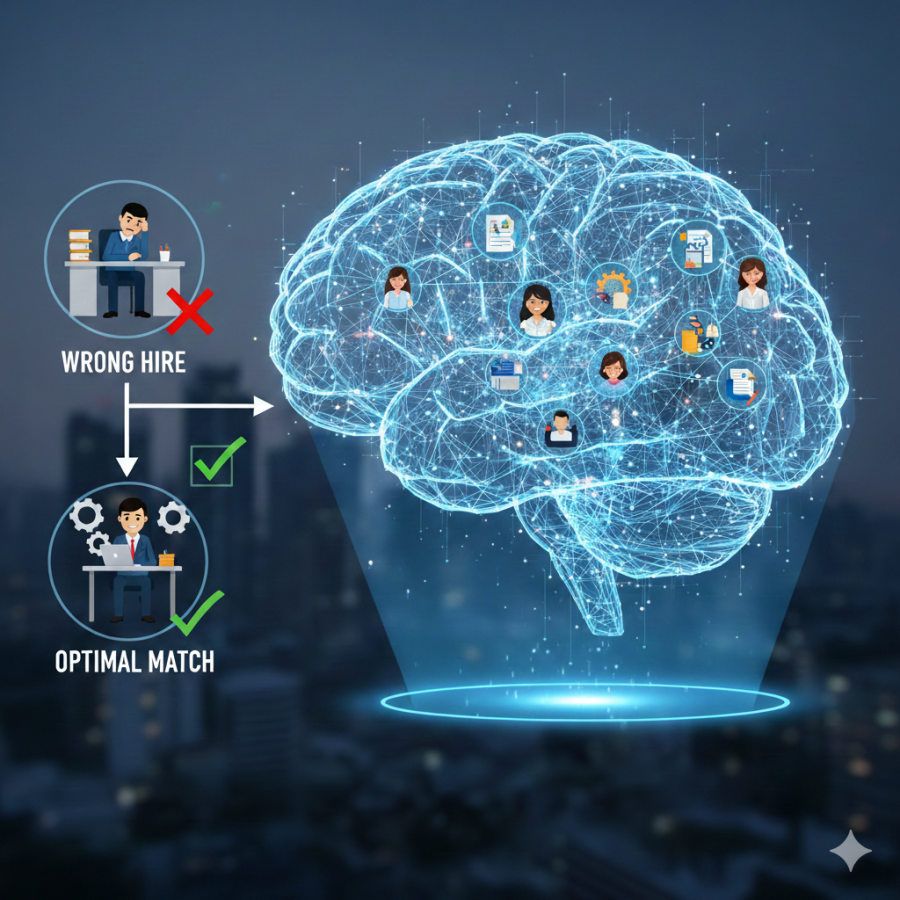
The Hidden Cost of Wrong Hiring
Every wrong hiring decision creates a ripple effect of problems. For employers, it means wasted time training someone who won't work out, lost productivity, and the cost of starting the hiring process all over again. For job seekers, accepting the wrong job means frustration, wasted effort, and the stress of being unemployed again within weeks or months.
This problem is particularly severe in skilled jobs, semi-skilled jobs, and manufacturing jobs where specific technical abilities, physical requirements, and work conditions matter significantly. A factory worker who cannot handle shift rotations will quit within weeks. A machine operator hired without the right technical knowledge creates safety risks. A warehouse assistant who lives too far away will struggle with the commute and eventually leave.
Traditional hiring methods struggle to prevent these mismatches. Resumes often exaggerate skills or hide important details. Phone interviews cannot fully assess technical capabilities. Employers rush to fill positions and compromise on requirements. The result: wrong hiring decisions that hurt everyone involved.
Artificial intelligence is fundamentally changing this scenario. By analyzing data more comprehensively, identifying patterns humans miss, and matching candidates with positions more precisely, AI-powered job matching is dramatically reducing wrong hiring decisions across industries.
Why Traditional Job Matching Fails
Understanding how AI improves hiring requires first understanding why traditional methods create so many mismatches.
Resume Reading Limitations: When a recruiter reads 200 resumes for factory jobs, they're looking for specific keywords and experience markers. But resumes don't tell the whole story. Two candidates might both claim "3 years of machine operation experience," but one worked on completely different equipment, or their actual responsibilities were minimal. Human recruiters lack the time to dig deep into every application, leading to surface-level matching.
Inconsistent Screening: Different recruiters assess candidates differently. One might prioritize experience, another values proximity to the workplace, and a third focuses on attitude during phone conversations. This inconsistency means similar candidates receive different treatment, and hiring quality varies based on who did the screening.
Hidden Deal-Breakers: Many hiring mistakes stem from factors that seemed minor during selection but become major problems after hiring. A candidate accepted manufacturing jobs requiring standing for 8-hour shifts but never actually experienced this physically demanding routine. Someone took a position 25 kilometers away without realizing the daily commute would become exhausting. These mismatches surface only after hiring, leading to quick resignations.
Pressure to Fill Positions: When employers desperately need workers—especially for factory jobs or manufacturing jobs during peak production periods—they often compromise on requirements. "We need someone immediately" leads to hiring whoever is available rather than who is actually suitable. These rushed decisions frequently result in poor performance or early turnover.
Limited Information Processing: Even the best human recruiter cannot simultaneously consider dozens of factors: skills match, experience level, location convenience, salary expectations, shift preferences, physical capabilities, cultural fit indicators, and past job stability patterns. They focus on a few key factors and hope the rest works out. Often, it doesn't.
How AI Creates Better Job Matching
AI-powered platforms approach job matching fundamentally differently, using data analysis and pattern recognition to create more accurate matches.
Comprehensive Profile Analysis: Instead of just reading what a resume says, AI analyzes the complete candidate profile. For skilled jobs like welding or electrical work, it doesn't just check if "welding" appears in the resume—it examines what types of welding, which certifications, what industries, and what equipment the candidate has actually used. This depth prevents mismatches where someone with the right job title lacks the specific skills needed.
Multi-Factor Matching: AI simultaneously evaluates dozens of criteria. When matching candidates for manufacturing jobs, it considers technical skills, experience years, location and commute feasibility, shift availability, physical requirements, salary expectations, job stability history, and equipment familiarity—all at once. This comprehensive matching catches incompatibilities that humans might miss while focusing on just 2-3 factors.
Pattern Recognition: AI learns from thousands of past placements. It identifies patterns: candidates with certain backgrounds succeed in specific roles, while others struggle. Candidates who frequently change jobs might continue that pattern. Certain skill combinations predict success in particular manufacturing jobs. These insights, derived from data, inform better matching decisions.
Realistic Expectation Matching: Many wrong hiring decisions happen because candidates accept jobs without fully understanding what they're getting into. AI can flag potential mismatches: "This candidate previously worked day shifts only, but this position requires rotating night shifts." "Previous jobs were all within 5km of home, but this factory is 18km away." These red flags help both parties make informed decisions.
Location Intelligence for Hiring Near Me: For a local hiring platform, understanding geographic practicality is crucial. AI doesn't just measure distance—it evaluates actual commute feasibility. Two factory jobs might both be 12 kilometers away, but one is accessible by direct bus while the other requires multiple changes and 90 minutes of travel. AI identifies these practical differences, reducing mismatches based on location challenges.
Impact on Skilled and Semi-Skilled Jobs
The benefits of AI-driven job matching are particularly pronounced for skilled jobs and semi-skilled jobs where specific capabilities matter enormously.
Skills Verification: For skilled jobs like CNC machine operation, electrical installation, or quality control, AI can cross-reference claimed skills with certifications, previous job responsibilities, and equipment experience. A candidate might claim "machine operation skills," but AI can determine if they operated the specific machines this employer uses, reducing training time and performance gaps.
Experience Depth Analysis: Semi-skilled jobs often require not just basic skills but sufficient depth of experience. AI can distinguish between someone who "has 3 years of warehouse experience" doing simple tasks versus someone who handled inventory systems, operated forklifts, and managed shipping documentation. This depth assessment creates better matches where candidates can actually perform at the level employers need.
Safety-Critical Matching: Many manufacturing jobs involve safety-sensitive equipment or environments. AI can prioritize candidates with relevant safety training, equipment certifications, and track records in similar environments. This reduces workplace accidents and creates safer, more competent workforces.
Reducing Turnover in Factory and Manufacturing Jobs
High turnover is expensive and disruptive, especially in factory jobs and manufacturing jobs where training takes time and production demands are constant. AI reduces turnover by preventing the mismatches that cause early resignations.
Shift Compatibility: Many factory jobs require night shifts, rotating shifts, or weekend work. Not everyone can handle these schedules due to family commitments, health considerations, or personal preferences. AI explicitly matches shift requirements with candidate availability and past shift work history, ensuring new hires can actually sustain the schedule.
Physical Requirement Matching: Manufacturing jobs often involve standing for long hours, lifting heavy items, working in hot or cold environments, or repetitive physical movements. AI can flag when a candidate's work history doesn't include similar physical demands, prompting explicit discussions about whether they can handle these requirements. This prevents hiring someone who quits after realizing the physical reality of the job.
Commute Sustainability: One of the most common reasons workers leave factory jobs is difficult commutes, especially when shifts start early or end late when public transportation is limited. AI-powered platforms offering hiring near me functionality specifically prioritize candidates for whom the commute is genuinely practical, not just theoretically possible. This significantly reduces turnover from commute-related frustration.
Compensation Alignment: AI matches salary expectations with what employers offer, preventing situations where someone accepts a job out of desperation but immediately starts looking for better-paying alternatives. When expectations align from the start, workers are more likely to stay.
Real-World Outcomes
The difference between traditional and AI-powered job matching shows up in measurable outcomes. Employers using AI-based platforms for manufacturing jobs report:
● 40-50% reduction in early turnover (employees leaving within first 3 months)
● 30% faster productivity ramp-up because new hires actually have claimed skills
● Fewer workplace incidents because safety-critical roles are filled with properly experienced workers
● Reduced hiring costs from not having to repeatedly fill the same positions
For job seekers, better matching means:
● Higher job satisfaction because positions actually match expectations
● Reduced job search time by seeing only suitable opportunities
● Better long-term employment stability
● Less wasted time interviewing for positions they wouldn't accept or couldn't handle
Why This Matters for Local Hiring
For a local hiring platform focused on connecting nearby employers and workers, AI-driven matching is especially valuable. Local hiring often involves skilled jobs and semi-skilled jobs in manufacturing, retail, logistics, and services—exactly the sectors where precise matching prevents costly mistakes.
When someone searches for hiring near me, they're prioritizing location convenience. AI ensures that not only is the job nearby, but it also genuinely matches their skills, experience, preferences, and capabilities. This dual optimization—location plus suitability—creates the strongest foundation for successful, lasting employment.
Similarly, employers seeking local talent benefit from receiving candidates who are both qualified and genuinely able to sustain employment at that location. This reduces the frustrating cycle of hiring, training, and losing workers, allowing businesses to build stable, productive teams.
The Future of Job Matching
AI technology continues improving, meaning job matching will become even more accurate. Future developments include:
● Better soft skill assessment through AI analysis of communication patterns and work history
● Predictive analytics showing which candidates are most likely to succeed long-term
● Real-time labor market matching that connects workers with opportunities the moment they become available
● More sophisticated cultural and team fit analysis beyond basic qualifications
For skilled jobs, semi-skilled jobs, and manufacturing jobs, these advances will further reduce wrong hiring decisions, creating more efficient labor markets where people find suitable work faster and employers build stronger teams quicker.
Conclusion
Wrong hiring decisions waste time, money, and opportunity for everyone involved. Traditional job matching methods, reliant on limited resume review and subjective judgment, create too many mismatches—especially for skilled jobs, semi-skilled jobs, factory jobs, and manufacturing jobs where specific capabilities and practical considerations matter greatly.
AI transforms job matching by analyzing candidates comprehensively, considering multiple factors simultaneously, learning from patterns, and identifying potential mismatches before they become problems. This results in better hiring outcomes: workers who actually have needed skills, can handle job requirements, find commutes manageable, and stay in positions longer.
For both employers seeking quality workers and job seekers wanting suitable opportunities, AI-powered job matching on a local hiring platform offers a better path forward—one where hiring near me means finding not just nearby jobs, but truly suitable employment that works for everyone involved.
Frequently Asked Questions (FAQs)
Q1: How does AI improve job matching for skilled jobs compared to traditional methods?
AI analyzes the depth and specifics of skills rather than just keywords. For skilled jobs like welding or machine operation, AI examines what types of equipment the candidate used, which certifications they hold, what complexity of work they handled, and whether their specific skills match the employer's exact requirements. This prevents hiring someone who has the right job title but lacks the precise capabilities needed.
Q2: Can AI help reduce wrong hiring decisions in factory jobs and manufacturing jobs?
Yes, significantly. AI matches multiple critical factors simultaneously: technical skills, shift availability, physical capability for demanding work, commute practicality through hiring near me optimization, and safety experience. Many wrong hiring decisions in manufacturing jobs happen because one of these factors wasn't properly assessed. AI ensures comprehensive evaluation, reducing mismatches that lead to quick resignations or performance problems.
Q3: How does a local hiring platform use AI to match semi-skilled jobs better?
For semi-skilled jobs, AI evaluates not just whether candidates have basic qualifications, but whether they have sufficient depth of experience for the role. It also considers practical factors like location convenience, shift compatibility, and physical requirements. By matching all these elements together, AI helps semi-skilled workers find positions they can succeed in and employers find candidates who will perform well and stay longer.
Q4: Why do wrong hiring decisions happen less frequently with AI-based job matching?
AI prevents the common causes of hiring mistakes: incomplete candidate assessment, inconsistent screening, overlooked deal-breakers, and pressure-driven compromises. It analyzes candidates thoroughly, applies consistent criteria, flags potential mismatches early, and helps both parties make informed decisions. This comprehensive approach catches problems before hiring rather than discovering them through costly turnover.
Q5: How does AI matching help when searching for hiring near me for manufacturing jobs?
AI understands that "near me" isn't just about distance but about commute practicality. For manufacturing jobs with early morning or late-night shifts, AI considers whether public transportation is available at those times, whether the commute time is sustainable daily, and whether the candidate has successfully handled similar commutes before. This ensures hired workers can actually sustain employment rather than quitting due to transportation challenges.

