What Is an AI-Powered Local Job Portal? A Complete Guide
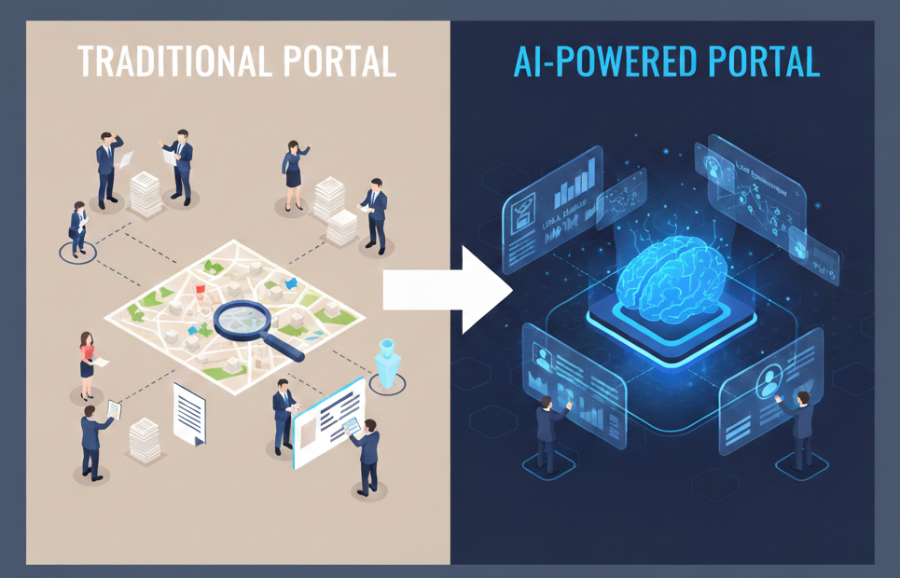
Understanding Modern Job Portals
The way people find work and companies hire employees has changed dramatically in recent years. Gone are the days when job seekers had to physically visit offices with paper resumes or rely solely on newspaper classifieds. Today, digital platforms connect employers and candidates instantly. However, not all job portals are created equal.
An AI-powered local job portal represents the latest evolution in recruitment technology—combining the convenience of online job searching with intelligent matching systems that understand both what employers need and what candidates can offer. For businesses looking to hire quickly and job seekers wanting relevant opportunities without endless scrolling, understanding how these platforms work is essential.
This guide explains what makes modern local job portals different, how artificial intelligence transforms the hiring experience, and why this technology matters for anyone involved in local hiring across India.
What Makes a Job Portal "Local"?
Before diving into AI capabilities, it's important to understand what defines a local job portal and why geographic focus matters.
A local hiring platform specifically connects employers with candidates in the same geographic area. Unlike national job boards that list opportunities across the entire country, local portals focus on helping people find jobs near me—opportunities within practical commuting distance from where they live.
This geographic focus serves several important purposes:
Practical Employment: When someone finds local jobs within their neighborhood or city, commuting becomes manageable. They spend less time and money traveling to work, leading to better work-life balance and higher job satisfaction. This practicality translates to employees who stay longer and perform better.
Faster Hiring: Employers seeking local talent can fill positions more quickly. Candidates don't need relocation time, they're familiar with the area, and they can start work immediately. For businesses that need positions filled urgently—retail stores preparing for sales seasons, restaurants staffing for events, or factories ramping up production—this speed is crucial.
Better Cultural Fit: Local hiring often means candidates understand the local language, culture, and business environment. A shop in a particular neighborhood benefits from employees who know that community. A manufacturing unit benefits from workers familiar with the local industrial area.
Reduced Turnover: Employees working close to home are more likely to stay long-term. Long, difficult commutes are among the top reasons workers leave jobs. By prioritizing jobs near me, local portals help create more stable employment relationships.
The Traditional Job Portal Model
To appreciate what AI-powered platforms offer, it helps to understand how traditional job portals in India have worked.
Basic job portals operate as digital bulletin boards. Employers post job openings with descriptions and requirements. Job seekers create profiles, upload resumes, and search through listings using keyword searches. When candidates find interesting opportunities, they apply. Employers receive applications and manually review them to find suitable candidates.
This model certainly beats paper-based methods, but it has significant limitations:
Information Overload: Popular job postings might receive hundreds of applications. Employers must manually read through all of them, a time-consuming process that delays hiring. Meanwhile, job seekers see hundreds of listings and must individually assess each one's suitability.
Poor Matching Accuracy: Basic keyword searches create many mismatches. Someone searching "sales jobs" might see enterprise software sales requiring years of B2B experience alongside retail counter positions—vastly different roles. Employers seeking "experienced electricians" receive applications from electrical engineers, showing how keyword matching fails to understand context.
No Learning Capability: Traditional platforms don't improve over time. They show the same results to similar searches regardless of whether previous matches worked well. There's no intelligence, no pattern recognition, and no personalization.
Manual Everything: Every step requires human effort—screening applications, comparing qualifications, reaching out to candidates, scheduling interviews. This creates bottlenecks that slow hiring significantly.
For local jobs, these problems become particularly frustrating because even when the right candidates exist nearby, traditional platforms struggle to connect them efficiently with suitable opportunities.
How AI Transforms the Job Portal Experience
An AI-powered local job portal operates fundamentally differently by using artificial intelligence to automate, optimize, and enhance every step of the hiring process.
Intelligent Job Matching
The most transformative AI capability is sophisticated job matching. Instead of simple keyword searches, AI analyzes the complete picture of both job requirements and candidate qualifications.
When an employer posts a position, AI understands not just the job title but the skills required, experience level needed, work environment characteristics, shift requirements, and dozens of other factors. It then compares these requirements against all registered candidates, evaluating their complete profiles—work history, skills, certifications, location, preferences, and past job patterns.
The result is precise matching. An employer seeking machine operators for a factory receives applications from candidates who have relevant machine operation experience, live within reasonable commuting distance, can work the required shifts, and possess necessary safety certifications. Job seekers searching for local jobs see opportunities that genuinely match their capabilities and circumstances, not just every job containing similar keywords.
This matching accuracy saves enormous time for everyone. Employers review smaller numbers of highly qualified candidates rather than hundreds of irrelevant applications. Job seekers apply only to suitable positions, increasing their success rate and reducing application fatigue.
Automated Screening and Ranking
AI doesn't just match candidates to jobs—it screens and ranks them automatically. When applications come in, AI instantly evaluates each candidate against job requirements, assigning relevance scores. Employers see candidates ranked by suitability, with the most qualified appearing first.
This automated screening happens instantly, meaning employers can see strong candidates minutes after posting a job rather than days later after manual review. For urgent hiring needs, this speed is game-changing.
Smart Notifications and Alerts
AI-powered platforms send intelligent notifications to the right people at the right time. When a job matching a candidate's profile gets posted, they receive an alert immediately. When a highly qualified candidate applies, the employer gets notified right away.
These notifications are selective, not spammy. AI learns user preferences—if someone consistently ignores certain types of jobs, they stop receiving alerts for similar positions. This personalization keeps notifications relevant and valuable.
Location Intelligence
For a local hiring platform, understanding geography is crucial. AI brings sophisticated location intelligence to this challenge.
Basic platforms measure straight-line distance: "This job is 8 kilometers from your location." AI understands practical commuting reality: "This job is 8 kilometers away, accessible by direct bus in 25 minutes during your shift times." It considers transportation availability, traffic patterns, and actual travel time—not just distance.
When someone searches for jobs near me, AI prioritizes opportunities with genuinely practical commutes, not just nearby addresses. This intelligence significantly improves hiring success because employees can actually sustain the daily travel their jobs require.
Predictive Analytics
Advanced AI systems learn from patterns across thousands of placements. They identify which candidate characteristics predict success in specific roles, which employers offer better opportunities, and which combinations of factors lead to long-term employment versus quick turnover.
This predictive capability helps both sides make better decisions. Employers see insights like "candidates with this background tend to excel in your type of role" or "this salary range attracts higher retention rates in your area." Job seekers receive guidance about which opportunities best match their career trajectory and circumstances.
Continuous Improvement
Unlike static traditional platforms, AI-powered systems get smarter with every interaction. Each successful placement teaches the system something. Each unsuccessful match (when someone quits quickly or performs poorly) provides learning data. Over time, the platform's matching accuracy, screening effectiveness, and prediction quality all improve.
This means users of an established AI-powered job portal in India benefit from accumulated intelligence—the system knows the local job market deeply and makes increasingly accurate connections.
Practical Benefits for Employers
For businesses using a local hiring platform with AI capabilities, the advantages are concrete and measurable:
Faster Time-to-Hire: Positions that traditionally took 3-4 weeks to fill can be completed in 7-10 days, sometimes faster for straightforward local jobs. This speed reduces productivity loss from unfilled positions and helps businesses respond quickly to market opportunities.
Higher Quality Hires: Better job matching means hiring people who genuinely fit the role's requirements. This translates to faster productivity ramp-up, better performance, and fewer hiring mistakes.
Reduced Hiring Costs: Faster hiring, fewer mismatches, and lower turnover all reduce overall recruitment expenses. Even when the platform charges fees, the total cost of hiring decreases significantly compared to slower, less effective traditional methods.
Better Candidate Experience: When applicants receive faster responses and see only relevant opportunities, they view employers more positively. This improves employer brand and helps attract better talent.
Data-Driven Decisions: AI platforms provide insights about the local job market—what skills are available, what salary ranges are competitive, how long similar positions typically take to fill. This information helps employers make smarter hiring decisions.
Practical Benefits for Job Seekers
For people searching for employment, AI-powered local job portals offer equally significant advantages:
Relevant Opportunities Only: Instead of wading through hundreds of unsuitable listings, job seekers see positions that actually match their skills, experience, and preferences. This saves time and reduces application fatigue.
Faster Responses: When employers use AI-powered screening, qualified candidates hear back much more quickly. The frustration of sending applications into a void is significantly reduced.
Better Location Matching: Searching for jobs near me yields results that consider actual commute practicality, not just proximity. This helps people find work they can sustain long-term.
Career Guidance: Many AI platforms provide insights about skill demand, salary benchmarks, and career opportunities in the local market, helping job seekers make informed decisions about their careers.
Fair Opportunity: AI-based matching focuses on actual qualifications rather than factors like which recruiter happened to review an application. This creates a more level playing field where skills and experience matter most.
How AI Handles Different Job Categories
AI-powered job matching works across all employment categories, but adapts its approach based on job type:
Skilled Positions: For technical roles requiring specific expertise, AI carefully matches technical skills, certifications, and experience depth, ensuring candidates actually possess required capabilities.
Entry-Level Jobs: For positions requiring minimal experience, AI focuses on availability, location convenience, basic qualifications, and learning potential.
Shift-Based Work: For jobs with non-standard hours, AI explicitly matches shift availability, ensuring candidates can work required schedules.
Local Service Roles: For customer-facing positions, AI can consider language capabilities, local knowledge, and relevant service experience.
This flexibility makes AI-powered platforms effective across industries—from retail and hospitality to manufacturing, logistics, healthcare, and beyond.
The Future of Local Hiring Platforms
AI technology continues advancing, meaning local job portals will become even more sophisticated. Future developments likely include:
● Voice-based job searching and applications for users more comfortable speaking than typing
● Real-time market matching that connects available workers with urgent hiring needs instantly
● Predictive career pathing showing workers which skills to develop for better opportunities
● Virtual reality job previews letting candidates experience workplace environments before applying
These innovations will make local hiring even faster, more accurate, and more accessible to everyone.
Conclusion
An AI-powered local job portal represents much more than a simple job listing website. It's an intelligent matching system that understands both what employers need and what candidates can offer, connecting them efficiently and accurately.
For employers, this means filling positions faster with better-qualified candidates, reducing hiring costs, and building more stable teams. For job seekers, it means finding relevant local jobs quickly, receiving faster responses, and securing employment that genuinely fits their skills and circumstances.
As technology continues advancing, the gap between AI-powered platforms and traditional job boards will only widen. Understanding how these systems work and leveraging their capabilities effectively will become increasingly important for anyone involved in hiring or job searching across India.
The future of local hiring is intelligent, fast, and data-driven—and that future is already here.
Frequently Asked Questions (FAQs)
Q1: What's the main difference between a traditional job portal in India and an AI-powered local job portal?
Traditional job portals work like digital bulletin boards using basic keyword searches, requiring users to manually sort through many irrelevant results. An AI-powered local job portal uses intelligent algorithms to understand both job requirements and candidate qualifications, automatically matching suitable opportunities with qualified candidates. This creates better job matching, faster hiring, and saves time for everyone involved by showing only relevant opportunities instead of requiring extensive manual filtering.
Q2: How does AI help job seekers find better local jobs?
AI analyzes your complete profile—skills, experience, location, preferences, and work history—then matches you with opportunities that genuinely fit. When you search for jobs near me, AI considers actual commute practicality using traffic patterns and transportation availability, not just distance. You receive personalized job recommendations and instant alerts for new relevant positions, significantly reducing time spent searching and increasing your chances of finding suitable employment.
Q3: Can small businesses benefit from using an AI-powered local hiring platform?
Absolutely. Small businesses often lack dedicated HR resources and cannot afford to spend weeks manually screening candidates. An AI-powered platform automates time-consuming screening work, instantly identifying qualified local candidates and ranking them by suitability. This levels the playing field, giving small businesses access to sophisticated hiring tools they couldn't afford otherwise, helping them compete for quality talent and fill positions faster.
Q4: How accurate is AI job matching compared to traditional recruitment methods?
AI job matching is significantly more accurate because it evaluates dozens of factors simultaneously—skills, experience, location practicality, shift compatibility, salary alignment, and past patterns—while traditional methods typically focus on just 2-3 factors due to human limitations. AI learns from thousands of successful placements, continuously improving its matching accuracy. Studies show AI-assisted matching reduces hiring mistakes and early turnover by 30-50% compared to traditional manual screening methods.
Q5: What should I look for when choosing a local job portal to use?
Look for platforms with AI-powered job matching capabilities, strong focus on local jobs in your area, fast notification systems for new opportunities, good mobile accessibility, and active employer participation. For a local hiring platform, check if it prioritizes jobs near me with intelligent location matching, offers relevant job recommendations rather than requiring extensive searching, and provides fast responses from employers. User reviews and the quality of job listings also indicate whether the platform will be effective for your needs.

